Prior to our future discussion in class on Roseanne Barr, I came across an interesting article related to her. In a time of political unrest, everyone is beginning to believe that they too can do a better job as President. Roseanne being the outspoken entertainer that she is, decided that she is going to run for the presidency.
It is not uncommon for an actor to become President. There was Ronald Reagan who was an actor before being a politician.
Being that Roseanne is stubborn, hard headed, and comedic do you believe that she can run the country?
Or do you think that she is not serious and this is a publicity stunt?
Thursday, March 22, 2012

Discussion Points-"And I Know"
What is the bottom line? What is the point the author is trying to make in this
reading? What is their thesis/ their argument?
reading? What is their thesis/ their argument?
Roseanne Barr discusses her difficulty in keeping her perspective, and feministic
views while in Hollywood.
This article displayed the pressures of remaining true to your self identity in Hollywood. In an atmosphere where many in Hollywood change who they are to become popular Roseanne, showed how she rose above it and stayed true to herself.
views while in Hollywood.
This article displayed the pressures of remaining true to your self identity in Hollywood. In an atmosphere where many in Hollywood change who they are to become popular Roseanne, showed how she rose above it and stayed true to herself.
What I liked about this article is it showed Roseanne's strength not only a
person but as a female as well.
person but as a female as well.
In the article Roseanne mentions an argument she had with Matt over a line change. Matt wanted Roseanne's character to say something along the lines of“You’re my equal in bed, but that’s it.” Instead of conforming to the boss, she argued for hours because she believed her character would not say that. In the end she won against Matt. This argument was empowering because she did not and refused to back down.
It was a great feeling that she never settled while filming the show. It
makes me wonder what the show would have been, if she would be like
Margaret Cho and change to please. Would the show be the same success? Also
Roseanne claims that her show, is the last feminist and working-class-family
sitcom. However, I beg to differ. I believe that the ABC television program THE
MIDDLE displays the same, modern, and feministic approach Roseanne had. Can
anyone else think of a program similar to Roseanne? Or is her show the only
feminist and working-class-family sitcom?
makes me wonder what the show would have been, if she would be like
Margaret Cho and change to please. Would the show be the same success? Also
Roseanne claims that her show, is the last feminist and working-class-family
sitcom. However, I beg to differ. I believe that the ABC television program THE
MIDDLE displays the same, modern, and feministic approach Roseanne had. Can
anyone else think of a program similar to Roseanne? Or is her show the only
feminist and working-class-family sitcom?
Discussion Points for Roseanne: unruly woman as domestic goddess
Bottom line: Roseanne’s overall character threatens the
dominant ideology of femininity all together. Deemed as grotesque, slouchy,
excess, loose and fat, Rosanne’s critics attempted to contain her unruliness
that challenged traditional values. Though subject to ridicule, Roseanne was
able to embody the unruly domestic goddess and portray it as a positive image.
Questions:
1.Why is it that Roseanne
was portrayed so negatively in the media but was so well received by audiences?
Is she seen as a threat to them? (The media)
2. How does her
character threaten the dominant ideologies in place?
3. Are there any
other actresses or characters that can be categorized as the Unruly domestic
goddess?
4.Does Margret Cho have similar attributes to Roseanne’s
character? Can she be considered unruly as well?
Thursday, March 15, 2012
Afghanistan women set themselves on fire!
The readings we had were about Muslim and Arab women not being opressed and how compared to American culture treatment of women is pretty much the same we just dress different and observe different ways of expressing our selves. I remembered the issue of women in the middle east setting themselves on fire so thier husbands wouldn't want them anymore and divorce them but the the outcomes were usually fatal. Domestic violence in America is a very prevalent issue, but battered women here have not come up with solutions as creative/symbolic as setting themselves on fire. Not to say that this is not an interesting read but one point made in the readings was that the media would rather us focus on the negative things that happen in other countries to build and reienforce the image that America is good and everywhere else is bad, when in fact American Media tends to neglect our own issues by not giving them the much needed attention they deserve.
Question:
What are issues you wish the media would focus on, on our own shores. http://afghanistan.blogs.cnn.com/2010/07/12/when-women-set-themselves-on-fire/
Wednesday, March 14, 2012
Media Moment...Key & Peele: Gay Marriage legalized

In this particular skit the two actors play two gay men in front of what appears to be a city hall building celebrating the legalizing of gay marriage.
Key's character is more reserved while his partner is much more flamboyant and outgoing. It's interesting to note how in their dialogue, Key's character constantly brings up the fact that the idea of marriage is something that he is not necessarily convinced of quite yet as opposed to his partner who fantasizes about their future. This back and forth between the two challenges certain schemas and hegemonic structures. Those being: B) Marriage is bliss or equates to happiness and that B) the legalizing of marriage constitutes or represents the desire of every LGBT individual. The skit supports the idea that marriage requires just as much consideration for the homosexual individual as do heterosexual couples, offering a different take on the subject then what is normally displayed in mainstream media. While this is a comedic sketch, its subtext is one of a much more serious and necessary discussion in both homosexual and heterosexual circles as to what are the implications of marriage beyond simply a government passed privileged. These types of conversations are typically not raised in mainstream media or in a 20/20 segment for instance yet Key & Peele are using comedy as a medium to offer smart and funny takes on these issues. By doing this they are in some sense unifying the personal and individual struggles of people and not just heterosexuals as it relates to marriage. The idea of marriage is not simply a debate between couples in heterosexual couples but rather one that is equally important in both sectors, and Key & Peele continue to use their sketches to tackle the notions of marriage.
Question: Why do you feel that these kinds of discussions are not presented in mainstream media? In your opinion can the comedic structure allow the issues to be taken more seriously or do these issues need to be presented in a different context? Are we in a post-gay society where these issues are diminishing or have we simply neglected these kinds of conversations and why?
Discussion Points for Homa Hoodfar's "The Veil in Their Minds and On Our Heads"

Information About The Article:
Homa Hoodfar
illuminates the reader with the origins of the various veils worn by Muslim
women and explains the ways in which the veil has been used by both Westerners
and Muslims alike to facilitate their own person goals for either continued
oppression or liberation. As Hoodfar states “veiling is a lived experience full
of contradictions and multiple meanings” (Pg. 5). Some women wear it because it is so socially ingrained that
a proper women wears it and that to do otherwise makes them feel naked. Some women wear it to fight the
oppressive colonial influence in the Middle East and North Africa. Some women wear it as a symbol of
feminine empowerment. Hoodfar
points out that the veil is not directly forced by Islam, and instead has been
adopted through interpretations of religious text. The misconceptions and misinterpretations of the veil and
it’s actual place in Islam and Muslim culture illustrates the underlying ignorance and racism
of Western culture towards Muslims.
The Western patriarchy uses the veil as a way to show how good women in
the west have it, and they should be grateful they aren’t oppressed in such a
way, thus reinforcing the patriarchy. This is mentality then
permeates Western feminists and they in turn try to implement their feminist
belief structures on Third World Women, with no care for these women’s actual
desires for equality, thus perpetuating the oppression and ignorance. As Homa Hoodfar explains this forces Muslim women to choose between fighting racism
and fighting sexism, and in her opinion they shouldn't have to choose at all.
Questions For The Class:
Before reading this article did you know the history of veiling, or the realities of the practice?
How far have we come since the 90’s in
regards to understanding veiling and the various ways in which it is used considering
how veiling has since been outlawed in some countries in the West?
Do you believe countries have a right to ban veiling?
Do you believe veiling to be oppressive and a reinforcement of a patriarchal system?
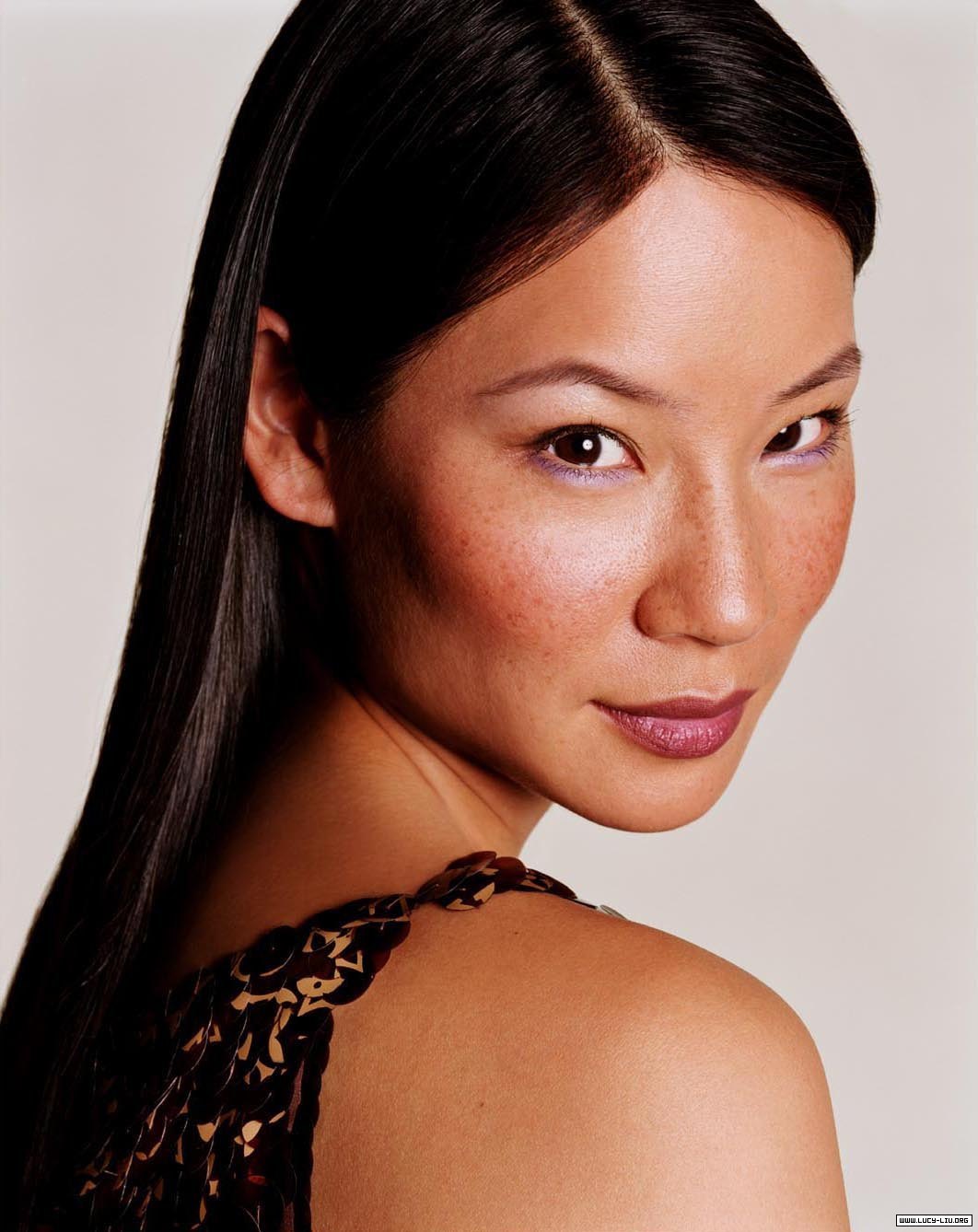
Lucy Liu to play Watson on new Sherlock Holmes Adaptation
 |
| Actress Lucy Liu |
Veteran television and film actress Lucy Liu has been cast to play Sherlock Holmes' loyal sidekick, Watson, in a pilot episode of a new CBS adaptation of the popular detective stories. The show, "Elementary" is being marketed as a modern, updated retelling of the Sir Arthur Conan Doyle's beloved short stories. It comes at a time when the BBC's "Sherlock" - also a modernized version - has been a critical and commercial success in spite of its somewhat radical approach. Liu's character, Jane Watson, is a former surgeon and NYPD consultant who platonically assists Sherlock Homes in solving mysterious crimes.
Although this is not the first time that a woman has filled the role of Watson on the small screen, Liu's status as an Asian American woman has sparked more than a little controversy across the web following the breaking of this news. The Guardian's TV & Radio blog scoffed at the idea, writing,
Now, the easiest thing to do when presented with this news would be to slap your head in despair. Watson? A woman? What madness is this? Won't this cancel out the asexual ambiguity of Sherlock's character? Why stop there? Why not make Watson a child, or a alien, or a rapping cartoon animal?
Comparing, even equating, a woman in the role of Watson to an alien or a "rapping cartoon animal" playing the character is, at least to me, extremely offensive. Even more so is the author's absurd claim that Holmes' sexual ambiguity will certainly be comprised by the addition of a female Watson. In his opinion, apparently, men and women cannot work together productively without a relationship or sexual intrigue developing.
The shock and resistance to a female, Asian Watson is clearly quite fierce. A meme even appeared on Buzzfeed which illustrates more blowback to the idea of Liu as Watson:

It bears mentioning that the Sherlock Holmes series of short stories was written by a Scottish author, and first appeared in 1887. At that time in Europe, more than a century ago, most detectives and their assistants (and, moreover, most publishers of literature) were privileged white men. Since then, these stories have been enjoyed by many people from all walks of life and society itself has changed dramatically. That the characters in our modern myths, such as Sherlock Holmes, could or should reflect this shifting social structure, seems to me an incontrovertible matter. That is not to say that "Elementary" as a television program will be good or bad - just that its quality should not be assessed even before it has been released, solely on the casting director's choice of an actor of a certain gender or race.
How do my classmates feel about this casting decision? What are the potential positive and negative effects that such a casting could have on this program? Do you think (or even, hope) that this could be part of a trend in more-inclusive casting of women/minorities into "traditional" characters?
Subscribe to:
Posts (Atom)