Thursday, March 1, 2012
Discussion Points for Debra Merskin, Three Faces of Eva
Info About the Article: Merskin describes how Eva Longoria's character on Desperate Housewives falls into the three categories mentioned in the article which are the Cantina Girl (the sexual object), the Faithful, Self Sacrificing Senorita (the good girl, gone bad who protects her white love interest) and the Vamp (uses her intellect and sexuality to get whatever she wants and she brings men to act violent). Longoria uses the fact that she is Hispanic and her sexuality in real life which does not make her so different from her character on television. The author ends the reading by stating that these stereotypes on televison make male viewers not expect much from Hispanic females based on how they see them portrayed in real life and that leads to Hispanic females not expecting much for themselves.
Questions for the class: Do you guys think that all Hispanic actresses on American televison fall into the "Latina Stereotype"? and for the ones that do fall into that stereotype can they be taken seriously in Hollywood or are they stuck playing these roles in any other project they do?
Discussion notes for the article "The myth of the Latin woman: I just met a girl named Maria" by Judith Ortiz Cofer
The article by Judith Ortiz Cofer discusses the struggles of both cultural differences and stereotypes that Latin women face here in the united states and abroad. Judith bases these struggles in the idea that because of the cultural differences of Puerto Ricans and Caucasians, certain cultural identifications for the Latin female are often misinterpreted by White males and are thus perpetuated in mainstream society through the media. For the dominant white male culture all that is seen are these stereotypes instead of a consideration for their cultural differences and personal individuality. This occurs both publicly and within the business sector in which women are taken advantage of as a result of these misinterpretations and because of their lack of education. Judith emphasizes the importance of education for young Latin women as a means for social transformation first on an individual level and then in society at large.
Questions: Are the issues of misinterpretation presented by Ms. Cofer truly issues of misinterpretation or could this be a segway into a larger discussion that should be centered around gender roles and feminist arguments? How have you individually processed a situation where an individual identified you by a cultural stereotype?
Media Moment, "Shit White Girls Say . . . to Black Girls"
Comedian Franchesca Ramsey posted her "Shit White Girls Say . . . to Black Girls" video to YouTube on January 4, 2012. Now, almost two months later, it has around 8.5 million views and 32,829 online comments. It's become one of the most viewed and most famous videos from the "Shit People Say" meme.
Franchesca got a lot of media attention for this video. The video's online comments made charges of racism, stereotyping and divisiveness, and media outlets covered the responses as a controversy. Franchesca pushed back. In this appearance on the Anderson Cooper Show she defends her video and her position.
For the class discussion tomorrow, think about these questions:
1. How do you read the "Shit White Girls Say . . . to Black Girls" video? Who is the intended audience? What is the video trying to say? Is it effective?
2. On the Anderson Cooper Show, how is Franchesca put on the defensive? What arguments does she make to defend herself?
3. Why did Anderson Cooper bring Franchesca's white friend on the show? What role does she play?
4. What is the ideology at play in this clip from the Anderson Cooper Show? How is racism treated and/or defined?
(32,829
Sunday, February 26, 2012
Media Moment, "My Fat, Beautiful Body"
![]() |
| LovingYourself |
I
wish there were more articles like this in the media, about loving your body
and being comfortable with something you, most times, cannot inevitably “fix.”
And this doesn’t have to resound with just females- it can also extend to guys. “Body image,” as the author writes, “isn't really about the image of
bodies. It's about the holistic relationships we have with our bodies. It's
about how bodies look, how they move, what they feel like, and how we treat
them.” There are plenty of girls who either try hard to lose weight or gain
weight to fit the “normative” standards of beauty but when they look at
themselves in a mirror, all they see is an ugly duckling still far from pretty.
We
are taken with her into the ballet class she attends and witness her most
edited thoughts and reactions to her own body as well as the bodies of her
classmates. Her struggle is unquestionable as we see through the lens of her
own eyes. She’s been pressured about her weight since she was 8. The people she
held important to her, namely her Dad, assisted in weakening her confidence– he
told her at 16 that he would buy her a car only if she lost weight, after
numerous tries of her dieting from young, with no success. Its sad that many
don’t get the help they need from the most influential people in their lives.
Although
she is extremely self-conscious throughout the ballet class, which is probably one
of the most vulnerable experiences in her day, she reassures herself that she
is beautiful, her body is her own and that in itself makes her a winner.
How would one accepting themselves as a “fat” girl/guy? How can
they balance that and make sure their health is up to par?
Thursday, February 23, 2012
Media Moment - Transvaginal Ultrasound
As some of you may have heard Virginia was on the verge of changing their state law to require women seeking an abortion to have an ultrasound. This was not however the ultrasound you're probably thinking of with the jelly and weird electric shaver being passed across your abdomen. This was transvaginal, which means these women would be penetrated by a doctor with the apparatus above. This is a link to a much more graphic and NSFW picture. An important note in this disturbing story is that women seeking an abortion, because they were raped, would be forced to endure this procedure as well, essentially forcing them to endure another rape. Now the Governor of Virginia Bob McDonnell (R), and ardent pro-life advocate and possible GOP Vice-President nominee, has finally decided he needs to review this bill in more depth after learning how invasive this required procedure would be, and how it might actually be grounds for doctors to be charged with sexual assault.
Obviously this topic is guaranteed to cause a stir as abortion is a very divisive topic in this country, however it relates to women and the media for a different reason. When you Google "Virginia Transvaginal Ultrasound" there are no major news network links above the fold of results. The first major news outlet is the Huffington Post, followed much further down by USA Today. When you go to the actual homepage of USA Today there is absolutely no mention of this issue whatsoever. Yet Gov. McDonnell's reversal of his position to endorse this bill is only a mere day old. If you then click the tab to bring you to the "News" section, again you will not find a link or reference to this issue. Only when you narrow the search again to "Nation News" do you find a link, and even then it is again below the fold of the page. This screenshot shows the top stories being pushed today. The reason I am using USA Today as a specific example is because it is the most widely circulated US publication in the world, not necessarily because it is the source of the most impartial news.
Obviously my initial thoughts on this were not only are women rights being steamrolled again but news outlets are barely covering this issue at all. A women is likely to be forcibly raped by a doctor to rid herself of a pregnancy caused by a rape and the nation is relatively silent. Why are women's rights still be overlooked in this country? Why are we apparently more interested in John Edwards sex tape suit than we are in the possibility of state passing a law so archaic and invasive than it borders on criminal? Why am I not seeing OWS-sized protests about this? Is it because the media makes it a point to not focus heavily on women rights issues or is it because the news room is still a boys club, and if it doesn't concern men then it's not that big of a deal? I would love to hear what some of you think. Oh, and the kicker to this entire story is that this bill was introduced by a women, Kathy Byron. That last fact made my brain implode.
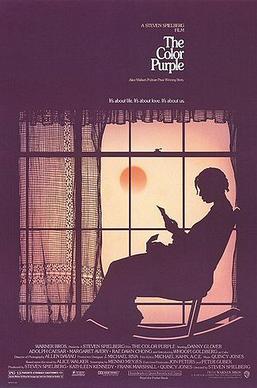
Discussion points for Jacqueline Bobo, "Black Women's Response to "The Color Purple'' "
A few points:
In her article, J. Bobo discusses the ongoing history of inaccurate and exploited portrayal of black women in the media industry. She utilizes S. Hall's ideas that social forces erupt from emerging of discourse. Bobo states that the critic plays a major role in how a film is perceived. Bobo illustrates that Spielberg's film"The Color Purple" caused African-American women to share a wave of "schizophrenic" reaction to the film, with it simultaneously being a work of a black woman, while being produced as a mainstream media product of a white male.
I wanted to address the following questions to the class...
1. Do you think that Hollywood deliberately glorifies stereotypes to boost box office sales?
2. Do you think that without the stereotypes "The Color Purple" would have the same success as it did? Does the American audience still accept stereotypes?
3. Do you agree with the notion that the viewer has a voice and an individual take on the material , or do you believe that the media fully control and manipulate one's digestion of the material?
Discussion Points for bell hooks, "The Oppositional Gaze"
The Bottom Line...
In
this essay from her 1992 book, Black Looks: Race and Representation,
bell hooks argues that as spectators of mass media (and especially, cinema)
black women have a unique perspective, which she refers to as the “gaze,” and
which is severely underrepresented within both film and academic/feminist film
studies. She describes this
oppositional gaze as a natural response to and outgrowth of the socio-historic
narrative of gender, race and personal identity that is particular to black
women. Finally, hooks
suggests that filmmakers create subjectivities that undermine current dominant
narratives while working to establish black female identity through the recognition of this "gaze" in their work.
My questions for the class are...
a) As media students & moviegoers, can you think of any black female characters in film that have specifically responded to or anticipated this confrontational, "oppositional" gaze in viewers - in recent years or otherwise?
b) hooks proposes using this "gaze" to empower black female characters and undermine the dominant hierarchy. Can you think of any other techniques to employ in film to this same end?
Subscribe to:
Posts (Atom)