Thursday, February 23, 2012

Media Moment - Transvaginal Ultrasound


As some of you may have heard Virginia was on the verge of changing their state law to require women seeking an abortion to have an ultrasound.  This was not however the ultrasound you're probably thinking of with the jelly and weird electric shaver being passed across your abdomen.  This was transvaginal, which means these women would be penetrated by a doctor with the apparatus above.  This is a link to a much more graphic and NSFW picture.  An important note in this disturbing story is that women seeking an abortion, because they were raped, would be forced to endure this procedure as well, essentially forcing them to endure another rape.  Now the Governor of Virginia Bob McDonnell (R), and ardent pro-life advocate and possible GOP Vice-President nominee, has finally decided he needs to review this bill in more depth after learning how invasive this required procedure would be, and how it might actually be grounds for doctors to be charged with sexual assault.

Obviously this topic is guaranteed to cause a stir as abortion is a very divisive topic in this country, however it relates to women and the media for a different reason.  When you Google "Virginia Transvaginal Ultrasound"  there are no major news network links above the fold of results.  The first major news outlet is the Huffington Post, followed much further down by USA Today.  When you go to the actual homepage of USA Today there is absolutely no mention of this issue whatsoever.  Yet Gov. McDonnell's reversal of his position to endorse this bill is only a mere day old.  If you then click the tab to bring you to the "News" section, again you will not find a link or reference to this issue.  Only when you narrow the search again to "Nation News" do you find a link, and even then it is again below the fold of the page.  This screenshot shows the top stories being pushed today.  The reason I am using USA Today as a specific example is because it is the most widely circulated US publication in the world, not necessarily because it is the source of the most impartial news.
Obviously my initial thoughts on this were not only are women rights being steamrolled again but news outlets are barely covering this issue at all.  A women is likely to be forcibly raped by a doctor to rid herself of a pregnancy caused by a rape and the nation is relatively silent.  Why are women's rights still be overlooked in this country?  Why are we apparently more interested in John Edwards sex tape suit than we are in the possibility of state passing a law so archaic and invasive than it borders on criminal?  Why am I not seeing OWS-sized protests about this?  Is it because the media makes it a point to not focus heavily on women rights issues or is it because the news room is still a boys club, and if it doesn't concern men then it's not that big of a deal?  I would love to hear what some of you think.  Oh, and the kicker to this entire story is that this bill was introduced by a women, Kathy Byron.  That last fact made my brain implode.

Discussion points for Jacqueline Bobo, "Black Women's Response to "The Color Purple'' "


A few points:
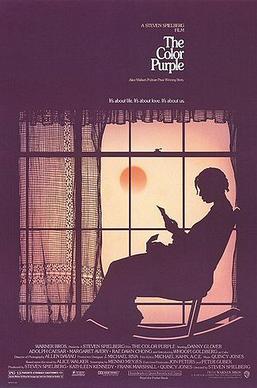
 In her article,  J. Bobo discusses the ongoing history of inaccurate and exploited portrayal of black women in the media industry. She utilizes S. Hall's ideas that social forces erupt from emerging of discourse. Bobo states that the critic plays a major role in how a film is perceived. Bobo illustrates that Spielberg's film"The Color Purple" caused African-American women to share a wave of "schizophrenic" reaction to the film, with it simultaneously being a work of a black woman, while being produced as a mainstream media product of a white male.
I wanted to address the following questions to the class...
1. Do you think that Hollywood deliberately glorifies stereotypes to boost box office sales?
2. Do you think that without the stereotypes "The Color Purple" would have the same success as it did? Does the American audience still accept stereotypes?
3. Do you agree with the notion that the viewer has a voice and an individual take on the material , or do you believe that the media fully control and manipulate one's digestion of the material?

Discussion Points for bell hooks, "The Oppositional Gaze"


The Bottom Line...
            In this essay from her 1992 book, Black Looks: Race and Representation, bell hooks argues that as spectators of mass media (and especially, cinema) black women have a unique perspective, which she refers to as the “gaze,” and which is severely underrepresented within both film and academic/feminist film studies.  She describes this oppositional gaze as a natural response to and outgrowth of the socio-historic narrative of gender, race and personal identity that is particular to black women.   Finally, hooks suggests that filmmakers create subjectivities that undermine current dominant narratives while working to establish black female identity through the recognition of this "gaze" in their work. 

My questions for the class are...
       a) As media students & moviegoers, can you think of any black female characters in film that have specifically responded to or anticipated this confrontational, "oppositional" gaze in viewers - in recent years or otherwise?
      
       b) hooks proposes using this "gaze" to empower black female characters and undermine the dominant hierarchy. Can you think of any other techniques to employ in film to this same end?

Tuesday, February 21, 2012

Media Moment_ Powerball


So... as I'm walking to the F train on 63rd and Lexington after an arduous day of classes, a telephone booth that had this ad in it's glass display caught my eye. It's simple to the naked eye. It tells a story: a white woman, with two kids, won the lottery and went shopping for market goods. Her son is operating their plane which was bought by their winnings. They're "landed" in a parking lot and there's a line which states "Yeah, that kind of rich." I found the ad quite comical but somewhat sexist in a way. Primarily because the woman/mother is doing the grocery shopping and not a male figure. I'm not saying that a man should be doing grocery shopping instead of a woman but why can't he? There is clearly a man walking towards the supermarket but I think he could have been placed there just so the advertiser (New York Lottery Powerball) wouldn't be questioned as they are in my post. 
And so my question to you is: In a country where a man is looked upon as the figure who brings home the income and a lady's responsibilities are to take care of the home and children, does this ad fit or break that stereotype, which history has known to be the norm of society? Women today, in my opinion, are more prevalent in the workforce and hold great social power as do men, and so I find it somewhat offensive that here, a woman is only able to take care of kids, do grocery shopping, and handle heavy machinery (which can also be a misinterpretation being that her son looks to be the pilot of the helicopter!) 

Monday, February 20, 2012

Media Moment,"Tyler Perry: Friend or Foe?"


Tyler Perry: Friend or Foe?

Tyler Perry’s new film “Good Deeds” premieres in theaters this Friday.  Most of his films attract huge audiences which are characterized by his impersonation of a southern Christian woman named Madea.  I respect and admire his ideology but his work not so much.  Perry has been praised by the all mighty Oprah and has been featured in the Black List Volume 3 which lists the most influential African Americans.  For the sake of this post let’s ignore the implications of the black list. (For now) I watched many of his films including “For Colored Girls” which I found to be very condescending. I do think he’s movies are satirical, perpetuate stereotypes and does not promote our culture.  Is this what Black America wants to see?  What’s your take on Tyler Perry? Is he a friend or foe to the black community?

Thursday, February 16, 2012

Discussion points for "The Social Psychology of Stereotypes"

My thoughts on the article "The Social Psychology of Stereotypes: Implications for Media Audiences":

Images and portrayals of groups in the mass media reinforce our automatic tendency to interpret information in a stereotypical way, even if we are not aware of it. Therefore the media only exacerbates the problem of prejudice and discrimination, making it harder to eliminate the problem entirely.

I do believe that the way we process new information is somewhat automatic, such as with stereotypes that have already been embedded in our minds. The media plays a big role in all of this, as we are subject to a 1,000-3,000 media images per day, as discussed in class. The media affects anyone no matter who you are; endorsers or non endorsers of stereotypes. It is how we work against them that can make a difference.

Question to the class: Have you ever found yourself drawing conclusions about a social group, even if you did not agree with the automatic stereotype? If yes, have you found it hard to work around the stereotype once they’ve been activated?

Tuesday, February 14, 2012

Media Moment, "Tweeting about Jeremy Lin"


Jeremy Lin of the NY Knicks

“ Jeremy Lin is a good player but all the hype is because he’s Asian. Black players do what he does every night and don’t get the same praise.”
It’s crazy how a single tweet can transform into a racial issue. This is what Floyd Mayweather, the undefeated U.S. boxer tweeted not even 24 hours ago and he’s getting serious backlash for it.
       Of course it will be news for Jeremy Lin, an American with Taiwanese roots, to be the talk of the town right now because that in and of it is different but it’s also about his skills on the court. Shucks, if I dropped 20 or so points every game, especially with Carmelo Anthony and Amare Stoudemire- Knicks star-players being out due to injuries, outscoring great players like Kobe Bryant and doing all this while coming from a low ranked college league (Harvard), my name would be all over the internet and sports shows too! Does LeBron not get praise for his swift moves and “money” shots? Or is Jordan not deemed as one of the greatest ball players of all time? Am I mistaken because I thought these players were African American as well?
How about Jason Whitlock’s (Fox Sports writer) tweet, “Some lucky lady in NYC is gonna feel a couple of inches of pain tonight,” clearly referring to J-Lin’s anatomy. Whitlock was eventually fired for his tweet but the fact still remains that stereotyping and relying on schema is still strong today as it’s ever been.
       We all know the schema about Asian males: extremely smart, nerdy, computer geniuses, short in height, into Pokemon and anime, small penis, strict family, owns a Chinese Restaurant and the list goes on. Its sad that J-Lin can’t quite get the respect he deserves because of his race.


My question to you guys is: Do you think, based off your own knowledge about race in the media and our readings, Jeremy Lin always have his race card played before his skills on the court? Why or why not?