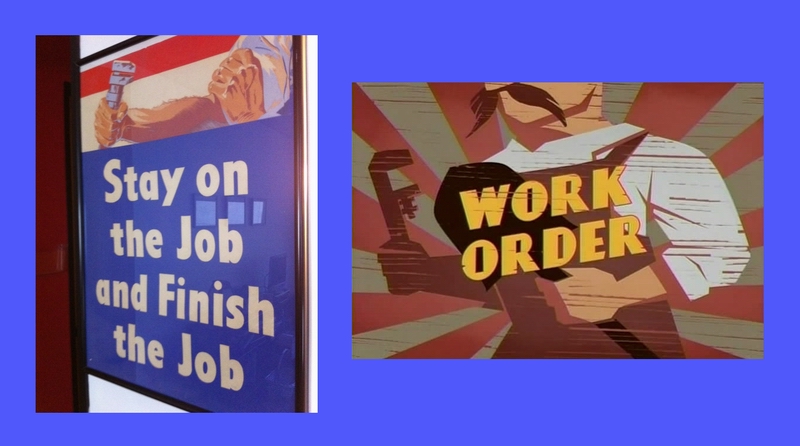
While most cartoons in the 1950's and 1960's victimized and oppressed certain cultural groups, primarily minorities, I found it fascinating that these stereotypes are still openly swimming in today's cartoon industry. As a nanny, I usually shift the children's leisure time away from television programs and any materials associated with the mainstream industry. However, during my shift this week I softened my standards and got pushed over into letting one of the girls to watch an airing of her favorite cartoon "Penguins of Madagascar". During the viewing of the episode, I encountered yet another alarming element in the media.One of the characters in the show, a plumber, Gus portrays a clumsy, Russian meat-head, who owns a business entitled Babushka Plumbing.
As comical and innocently funny as his character might be, this depiction provokes the already existent negative connotations of the Russian community. Gus's broken English, his Lenin-based work ethic, and immense physical strength all translate into the endorsement of the Cold War tension that hurricaned through United States from the late 40's til the early 90's. As an immigrant, I found this episode to be extremely detrimental and offensive to the Russian demographic.It's immensely disappointing to see these constructions being fed to the youngest generation, due to the fact that such negative portrayal formulates a vicious cycle of oppression. Despite the fact that Cold War ended in 1991, American television still holds the division ground between United States and the "Soviets".
Question:
Do you find that the depiction of the above stereotype is directly correlated to the previous historic and political events? What do you think is the primary driving force for its release?


